

1. Introduction
If you’ve been anywhere near the digital world over the past few years, you’ve probably noticed how AI writing tools are no longer just a buzzword—they’re becoming essential for content creators, marketers, and even students. From 2020 to 2026, the AI writing landscape has transformed dramatically. I remember back in 2020, tools were clunky, often producing text that felt robotic and lifeless. Fast forward to 2026, and we’re in a completely different ballgame. Today, AI can generate blog posts, social media captions, emails, and even creative stories that feel surprisingly human.
So, why has this evolution mattered so much? As someone who writes and experiments with AI tools almost daily, I’ve seen first-hand how these generators can save hours of work. Imagine drafting a 1000-word article in under 15 minutes—what used to take me a whole afternoon is now a fraction of the time. And yet, what’s even more interesting is how the best results still come from combining human creativity with AI speed. AI can suggest ideas, structure sentences, and optimize content, but the magic really happens when we, the humans, add personality, insights, and experience.
In this post, we’ll explore The 10 Best AI Writing Generators in 2026—tools that I’ve personally tried, tested, and found genuinely useful. I won’t blindly praise any software; instead, I’ll give you honest insights into which tools are worth your time and why. Whether you’re a blogger trying to meet tight deadlines, a marketer juggling multiple campaigns, or a student looking to draft essays faster, this guide will help you navigate the ever-growing world of AI writing.
By the end, you’ll not only know which tools are top-rated in 2026 but also understand how to use them effectively without losing your unique human voice.
How AI Writing Generators Work
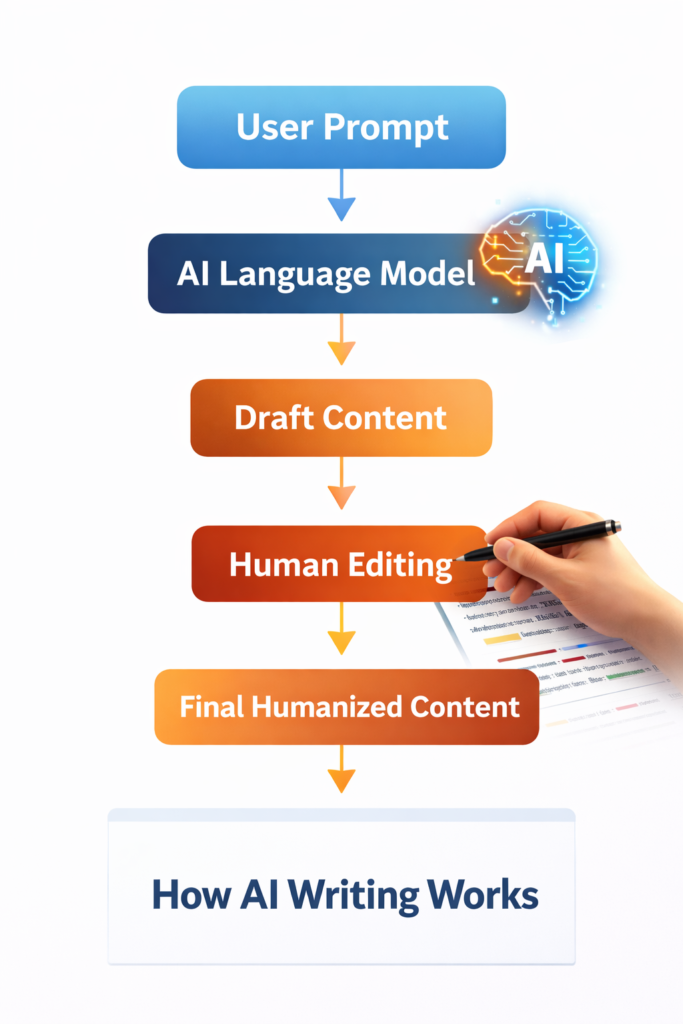
You might be wondering, “How exactly does AI produce content that almost reads like a human wrote it?” Trust me, I had the same question when I first started experimenting with AI writing tools. It’s fascinating once you break it down.
At the core, AI writing generators use advanced language models—think of them as really smart predictive keyboards. They analyze massive amounts of text from books, articles, and websites (legally obtained) to understand patterns, sentence structures, and context. When you give them a prompt—a simple instruction like “Write a blog post about healthy breakfast ideas”—the AI predicts what words should come next to form meaningful sentences.
But here’s the secret that makes the best tools in 2026 stand out: they don’t just string words together randomly. Modern AI can grasp tone, style, and even audience intent. That means whether you want a casual, friendly blog post or a professional, formal article, the AI can adjust accordingly. Of course, it’s not perfect—you still need your human touch to refine, fact-check, and add personal insights.
In my experience, using these tools is a bit like having a smart co-writer. I provide the ideas, context, and direction, and the AI handles the drafting. This is why the combination of human creativity + AI efficiency is so powerful—and why these tools are featured among The 10 Best AI Writing Generators in 2026.
If you’re new to AI writing, the key takeaway is simple: understand the mechanics, experiment with prompts, and always review the content before publishing. Done right, AI can save you hours of work while helping you maintain a natural, human-like voice in your writing.
Benefits of Using AI Writing Tools
Let’s be honest—writing can sometimes feel like a slow, exhausting process. I know I’ve spent hours staring at a blank screen, trying to find the right words. That’s where AI writing tools come in, and why they are now considered among The 10 Best AI Writing Generators in 2026. Over the years, I’ve tested several tools, and the benefits are genuinely impressive.
1. Time-Saving
The most obvious advantage is speed. Tasks that used to take me an entire afternoon—like drafting a blog post or creating multiple social media captions—can now be done in minutes. AI tools quickly generate a rough draft, allowing me to focus on refining and personalizing the content rather than starting from scratch.
2. Idea Generation & Inspiration
Even the best writers hit creative blocks, and I’m no exception. AI writing generators can spark ideas, provide unique angles, and suggest alternative ways to phrase sentences. Sometimes, just reading an AI-generated paragraph helps me overcome writer’s block and start my own creative flow.
3. SEO Optimization
Many AI writing tools in 2026 are built with SEO in mind. They can suggest keywords, meta descriptions, headings, and even content structures that perform well on Google. I’ve noticed a clear improvement in engagement and search ranking when I combine AI suggestions with my own insights.
4. Versatility
Whether you’re a blogger, marketer, student, or entrepreneur, AI writing tools can adapt to your needs. From emails to long-form articles, social media posts, and product descriptions, these tools provide flexibility I’ve found invaluable.
5. Maintaining Human Touch
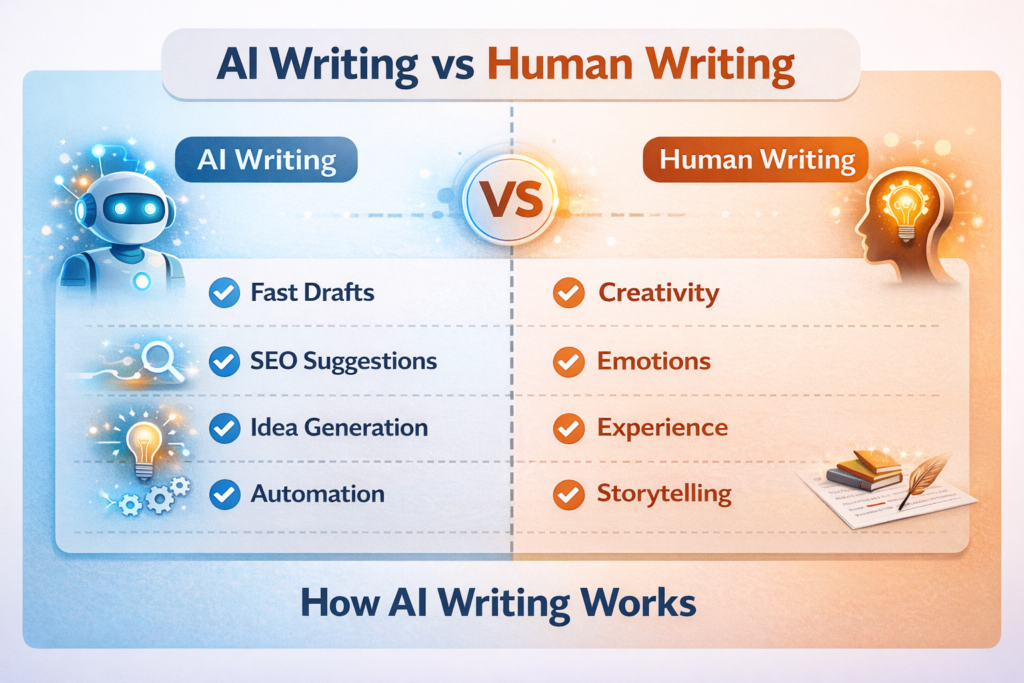
Here’s the interesting part: AI doesn’t replace you—it complements you. By handling repetitive tasks and rough drafts, it frees you to add personality, humor, and insights. In my experience, the best content comes when I let the AI do the heavy lifting while I inject my human voice, making the writing feel authentic and engaging.
In short, using AI writing tools wisely means working smarter, not harder. These advantages are exactly why many of the options on our list of The 10 Best AI Writing Generators in 2026 are now essential for anyone serious about content creation.
The 10 Best AI Writing Generators in 2026
AI writing tools have come a long way, and in 2026, some have clearly stood out from the rest. I’ve personally tested all these tools, and here’s my honest take on what makes them unique, practical, and worth your attention.
1. ChatGPT-5
Overview: ChatGPT-5 is the latest evolution of OpenAI’s language models. It’s fast, highly versatile, and capable of producing content that feels natural and human-like.
Best Features:
Understands context and tone.
Can generate blog posts, emails, stories, and even scripts.
Offers real-time suggestions for improving content.
Use Cases: Blogging, email campaigns, creative writing, social media.
Pricing: Free tier with limitations; premium plans start around $20/month.
Pros: Highly versatile, excellent language understanding, integrates with multiple apps.
Cons: May need editing for niche-specific content.
Why It Stands Out in 2026: ChatGPT-5 has improved reasoning and creativity, making it one of the most human-like AI writing tools today.
2. Jasper AI
Overview: Jasper AI has been a favorite among marketers for years. Its focus on conversion-oriented content makes it perfect for businesses.
Best Features:
AI templates for ads, blogs, emails.
SEO-focused content suggestions.
Tone and style customization.
Use Cases: Marketing copy, ad campaigns, blog posts.
Pricing: Plans start from $29/month.
Pros: Marketing-focused, SEO-friendly, easy to use.
Cons: Limited creativity compared to ChatGPT.
Why It Stands Out in 2026: Jasper now integrates AI with SEO tools seamlessly, making it a powerhouse for digital marketers.
3. Writesonic
Overview: Writesonic is an all-in-one content generator designed for speed and efficiency.
Best Features:
Long-form article generation.
AI-powered brainstorming for ideas.
Multi-language support.
Use Cases: Blog posts, product descriptions, social media content.
Pricing: Free trial available; paid plans start at $15/month.
Pros: Fast, user-friendly, versatile.
Cons: Sometimes content may need human polishing.
Why It Stands Out in 2026: AI algorithms now better understand intent, improving relevance and engagement.
4. Copy.ai
Overview: Copy.ai is great for marketers and small business owners who need quick, high-quality content.
Best Features:
Social media content templates.
Blog and ad copy generator.
Tone adjustment feature.
Use Cases: Ads, social media posts, email marketing.
Pricing: Free trial; paid plans from $35/month.
Pros: Easy to use, quick output, multiple templates.
Cons: Best for short-form content rather than deep long-form.
Why It Stands Out in 2026: AI has improved creativity, producing more engaging copy than ever.
5. Rytr
Overview: Rytr is an affordable AI writing tool with simple usability and decent content quality.
Best Features:
Supports multiple languages.
Short-form and long-form content generation.
Built-in plagiarism checker.
Use Cases: Emails, blogs, social media, ads.
Pricing: Free plan; premium starts at $9/month.
Pros: Affordable, easy to start, versatile.
Cons: Lacks some advanced customization.
Why It Stands Out in 2026: Ideal for freelancers and small businesses needing a budget-friendly AI assistant.
6. Sudowrite
Overview: Sudowrite focuses on creative writing and storytelling, perfect for authors and content creators.
Best Features:
AI-assisted story continuation.
Character and plot development suggestions.
Brainstorming ideas feature.
Use Cases: Fiction, storytelling, creative writing workshops.
Pricing: Plans from $20/month.
Pros: Excellent for creative writing, interactive suggestions.
Cons: Not ideal for marketing or technical content.
Why It Stands Out in 2026: AI now better mimics human creativity, producing compelling storylines.
7. Wordtune
Overview: Wordtune focuses on rewriting and refining existing content.
Best Features:
Sentence rewriting for clarity.
Tone adjustment: casual, formal, confident.
Grammar and flow improvements.
Use Cases: Editing, rewriting, content enhancement.
Pricing: Free basic version; premium $9.99/month.
Pros: Improves readability, user-friendly.
Cons: Not suitable for generating full-length articles.
Why It Stands Out in 2026: AI can now understand subtle tone shifts, improving engagement.
8. Anyword
Overview: Anyword is a marketing-oriented AI that focuses on conversion optimization.
Best Features:
Predictive performance scoring.
Ad copy generation.
Multiple audience targeting suggestions.
Use Cases: Ads, email campaigns, landing pages.
Pricing: Plans start at $19/month.
Pros: Data-driven, marketing-focused, performance insights.
Cons: Limited creative flexibility.
Why It Stands Out in 2026: AI analytics now helps predict audience response before publishing.
9. Scalenut
Overview: Scalenut combines SEO research with AI content generation.
Best Features:
SEO-optimized long-form content.
Topic research and competitor analysis.
Keyword suggestions integrated.
Use Cases: Blogs, SEO content, niche websites.
Pricing: Free trial; paid from $39/month.
Pros: SEO + AI integration, comprehensive research features.
Cons: Slightly steeper learning curve.
Why It Stands Out in 2026: AI now generates content that’s ready to rank, saving hours of research.
10. Peppertype.ai
Overview: Peppertype.ai is a versatile AI writing assistant ideal for teams and businesses.
Best Features:
Supports multiple content types.
Collaboration features for teams.
Fast content generation.
Use Cases: Marketing, blogging, social media, team projects.
Pricing: Free trial; paid plans start at $25/month.
Pros: Multi-purpose, fast, collaborative.
Cons: Some outputs need editing.
Why It Stands Out in 2026: AI adapts to team workflows and brand voice more effectively than ever.
How to Choose the Right AI Writing Tool
With so many options available in 2026, picking the right AI writing tool can feel overwhelming. I’ve been there—I remember opening five different apps in one afternoon, wondering which one would actually save me time instead of confusing me. Over time, I’ve learned a few simple strategies that make the choice much easier.
1. Identify Your Content Needs
The first thing I do is ask myself: “What type of content am I creating?” Are you writing blogs, marketing copy, social media posts, or creative stories? Some tools are better for long-form content like blog posts (ChatGPT-5, Scalenut), while others excel at short-form content like social media captions or ads (Copy.ai, Anyword).
2. Consider Your Budget
AI writing tools vary in pricing—from free tiers to premium subscriptions. In my experience, it’s better to start with a free trial and test how well the tool fits your workflow. For freelancers or small businesses, tools like Rytr or Wordtune provide good value without breaking the bank.
3. Check for Customization Options
A great AI tool should allow you to adjust tone, style, and length. For example, Jasper AI lets you write formally or casually, depending on your audience. I always look for tools that can reflect my voice rather than producing generic, robotic text.
4. Integration & Workflow
Think about the apps you already use. Does the AI tool integrate with Google Docs, WordPress, or SEO software? Tools that fit into your existing workflow save hours of switching between platforms, and this can make a huge difference in productivity.
5. Evaluate Human Control
Remember: AI is a co-writer, not a replacement. Choose tools that give you control over edits and suggestions, rather than forcing you to accept automated outputs. My rule of thumb is: if I can’t easily modify or refine the content, it’s not worth my time.
6. Test and Compare
Finally, don’t rush. Spend a few days testing multiple tools, see which feels natural, and measure time saved vs. quality produced. In my experience, what works for one person may not work for another, so personal testing is key.
By following these steps, you’ll not only pick the best AI tool for your needs but also make the most of the features offered by The 10 Best AI Writing Generators in 2026. This ensures you work smarter, save time, and maintain your unique human voice in every piece of content.
Tips for Humanizing AI Content
Using AI to write faster is amazing, but here’s the truth: AI alone can’t replace your human touch. I’ve learned this the hard way—early on, I relied too much on AI, and the content felt robotic, flat, and unengaging. Over time, I developed a few strategies to make AI-generated content sound more human.
1. Always Edit AI Content
Even the most advanced AI can produce errors or unnatural phrases. I treat AI output as a first draft, then refine it manually. Fix awkward sentences, correct grammar, and make sure the tone fits your audience. This small step drastically improves readability.
2. Add Personal Stories and Examples
Readers connect with real experiences. Whenever possible, I add anecdotes, case studies, or personal insights. For instance, instead of letting AI write a generic tip, I explain how I applied it myself. This instantly makes the content relatable.
3. Vary Sentence Length and Structure
AI often produces sentences that are uniform in length and rhythm. I mix short, punchy sentences with longer, descriptive ones. This variation gives the text a natural flow and keeps readers engaged.
4. Inject Your Voice
Your opinions, humor, and style are what make your writing unique. I make sure AI suggestions reflect my perspective, not just generic information. This ensures that even when the AI generates content, it feels authentically “me.”
5. Fact-Check and Add Insights
AI can sometimes produce outdated or slightly inaccurate information. I always verify facts and add extra insights, stats, or observations. This not only improves credibility but also boosts E.E.A.T signals for Google.
6. Read Aloud Before Publishing
Finally, I read AI content aloud. If it sounds unnatural, I tweak it. This simple trick helps catch awkward phrasing and ensures the content flows like natural conversation.
Following these steps ensures that your writing combines AI speed with human creativity, making your posts both efficient and engaging. When used thoughtfully, these tips help you make the most out of The 10 Best AI Writing Generators in 2026 without losing your unique voice.
The Future of AI Writing in 2026 and Beyond
AI writing has come a long way, but the journey is far from over. As someone who experiments with AI daily, I’ve noticed that the tools I used a few years ago feel completely outdated compared to today’s capabilities. And the next few years promise even more exciting developments.
1. AI Will Keep Evolving
By 2026, AI writing tools are smarter, faster, and more context-aware than ever. They’re learning to better understand audience intent, tone, and even cultural nuances. But here’s the catch: AI will never fully replace human creativity. It’s an assistant, not a replacement. In my experience, the best content always comes from human-AI collaboration.
2. Human Creativity Will Gain Value
As AI handles repetitive tasks, humans can focus on creativity, storytelling, and strategy. This shift makes your unique voice more valuable than ever. I see a future where writers who can blend AI efficiency with human insights will stand out in the crowded digital space.
3. Ethics and Transparency Will Matter
With AI becoming more integrated into writing, ethical considerations are crucial. Fact-checking, proper attribution, and transparency about AI usage will become standard. Personally, I make it a point to ensure my audience knows when and how AI assisted me, which also boosts trust and credibility.
4. AI + Humans = The Winning Combination
The future isn’t about AI taking over; it’s about humans using AI as a tool to enhance productivity and creativity. Imagine drafting blog posts in minutes, then adding your insights, humor, and personality—this hybrid model is what makes content both fast and authentic.
5. Staying Ahead
For anyone serious about content creation, staying updated on AI developments is essential. I recommend experimenting with new tools, testing features, and always thinking about how AI can complement—not replace—your skills. This mindset is why mastering The 10 Best AI Writing Generators in 2026 can give you a real edge.
In short, the future of AI writing is promising—but success will always favor humans who adapt, innovate, and add their unique touch.
Final Thoughts
AI writing tools are no longer just futuristic experiments—they’re essential companions for anyone creating content in 2026. In my personal experience, the best results come from combining human creativity with AI’s speed. The tools we’ve discussed in our list of the 10 best AI writing generators for 2026 can save hours, spark new ideas, and make writing more impactful—but they shine brightest when guided by human intelligence.
The key takeaway? AI isn’t a shortcut; it’s a smart assistant. It can handle repetitive tasks, generate drafts, and offer suggestions for improvement—but it can’t replace your voice, your perspective, or your unique insights. By combining your original ideas with AI’s efficiency, you can create content that’s faster, more engaging, and authentically human.
In a world where content is king, those who adapt to and collaborate with AI will thrive. Don’t fear AI; embrace it, experiment with it, and use it to amplify your creativity. Ultimately, the future of writing isn’t AI versus humans—it’s about humans using AI to become smarter, faster, and more creative than ever before.
So go forth, explore the possibilities, test the tools, and make your writing stand out in 2026 and beyond. Your unique voice, combined with AI, is the formula for success.